How Your Income Level Influences Your Creditworthiness (and Does It Really?)

11th Dec 2025
When applying for credit in the UK—whether a loan, mortgage, or credit card—most people assume that income is the key factor lenders look at. While income does play an important role in your overall financial profile, it may not influence your creditworthiness in the way many expect. Understanding how income interacts with credit scoring and lending decisions can help you improve your chances of approval and manage your finances more effectively.
For quick and secure credit checks, you can use CreditCheckOnline.co.uk.
Does Income Directly Affect Your Credit Score?
Surprisingly, income is not included in your credit score. UK credit reference agencies—Experian, Equifax, and TransUnion—do not factor your salary into the numerical score you see on your report. Instead, scores are based on:
-
Payment history
-
Credit utilisation
-
Length of credit history
-
Types of credit
-
Recent credit applications
This means a high-income individual with poor financial habits can have a much lower credit score than someone on a modest income who manages their credit responsibly.
How Lenders Use Income to Assess Creditworthiness
Although income does not influence the credit score itself, lenders still use it as part of their decision-making through affordability assessments. These checks help lenders determine:
-
Whether you can afford monthly repayments
-
How stable your income is
-
Your debt-to-income ratio
-
What credit limit or loan size would be appropriate
Higher income may improve your odds of approval because it reduces the lender’s perceived risk, but only if it aligns with a strong credit history. Conversely, even with a good income, too much existing debt or missed payments can still lead to rejection.
Debt-to-Income Ratio: The Real Influencer
One of the most important relationships between income and creditworthiness is the debt-to-income ratio (DTI). This compares your monthly income to your monthly debt obligations. A high DTI suggests you may struggle to take on additional financial commitments, making lenders hesitant to approve applications.
Even without a high income, a low DTI can signal strong financial stability and increase your chances of being approved.
Why Lower-Income Borrowers Are Not Automatically High-Risk
A common misconception is that lower-income individuals are more likely to default. In reality, lenders look for patterns of responsible behaviour, such as:
-
Consistent on-time payments
-
Low credit utilisation
-
Stable long-term banking history
-
Minimal hard searches within short periods
These factors often carry more weight than income alone.
How to Improve Creditworthiness Regardless of Income
1. Pay bills on time
Your payment history is the biggest factor influencing your credit score.
2. Keep credit usage below 30%
Using too much available credit signals financial strain.
3. Build credit gradually
Small, manageable credit products help demonstrate responsibility.
4. Check your report regularly
Spot and correct errors using tools such as CreditCheckOnline.co.uk.
5. Avoid unnecessary applications
Multiple hard searches can temporarily reduce your score.
FAQs
- Does my income change my credit score?
No. Income is not part of your credit score calculation.
- Why do lenders ask for income details?
They use it for affordability checks to ensure you can manage repayments.
- Can I get credit with a low income?
Yes—if your credit history is strong and your debt levels are manageable.
- Does a higher income guarantee approval?
No. Missed payments or poor credit behaviour can still lead to rejection.
- Where can I check my credit report?
You can check it securely at CreditCheckOnline.co.uk.
Don't risk missing
something important
Access a comprehensive credit report
that includes detailed data from TransUnion
View your credit score for only £1.95.
You can view it for 1 month, after which it will be £14.95 per month unless cancelled.
See How You Score
See How You Score
An Independent View Of Your Credit Score
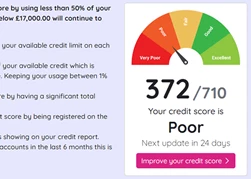
Lenders typically use their own systems to calculate your Credit Score based on the information in your Credit Report, often checking with one or more Credit Reference Agencies. Your Credit Check Online Credit Score is derived from all the Credit Report information we gather from TransUnion, helping you understand how you might be assessed when applying for credit.
Understand What is Affecting Your Credit Score
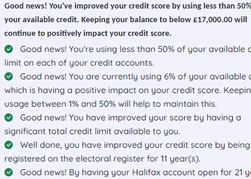
Quickly see how the details in your Credit Report influence your Credit Check Online Credit Score, both positively and negatively. This clear overview helps you identify areas for improvement and better understand the factors that lenders consider when assessing your creditworthiness.
View your credit score for only £1.95.
You can view it for 1 month, after which it will be £14.95 per month unless cancelled.